Showing posts with label Business. Show all posts

June 01, 2018

Medical Marijuana in Oregon: Regulation in a Direct Democracy State

Direct Democracy, or pure democracy exists where citizens write policy initiatives themselves. If activist groups collect enough signatures in the allotted time, the initiative makes it to the ballot. If voters approve the initiative, it becomes law. In representative democracy States, citizens vote for representatives who then write and implement policy based on the best interests of the citizens of that State. Currently, in the United States, California, Oregon, Colorado, Michigan, Arizona, North Dakota and Montana are direct democracy States and have been able to establish Cannabis regulation through direct voter initiatives. Oregon allows for all six forms of direct democracy. Let's examine what activist and special interest groups had to do to enact Cannabis Regulation in this State.

Oregon started its path to Cannabis regulation in 1973 becoming the first State to decriminalize Cannabis with The Oregon Decriminalization Bill abolishing criminal penalties for possessing small amounts of Cannabis. Possession of less than an ounce of Cannabis became punishable as a misdemeanor with a $500 to $1000 fine. Private use of Cannabis and public intoxication were no longer punishable offenses, however, public use and driving under the influence were punishable and continue to be to this day.

In 1998, The Oregon Medical Marijuana Act, established by Ballot Measure 67 was enacted allowing citizens with one or more of the listed qualifying conditions with a doctor's recommendation to obtain a State issued Medical Marijuana Card. This allowed the Patient possession of 1.5 pounds of Cannabis at any given time and the ability to grow 18 immature plants and 6 mature plants without the fear of citation, arrest or penalty. Patients could choose a caregiver to grow for them if they were unable and those caregivers would enjoy the same protections as the Patient. Before dispensaries were established, Patients had to grow their own or rely on a network of caregivers to produce medicine for them. Oregon became the second State in the US to enact a system of safe access for Medical Cannabis Patients following California Prop 215.

It wasn't easy to push this initiative through the legislative process through to implementation. First, activists had to write the initiative and gather signatures in the statutory time frame. After the vote, they had to ensure the Legislators followed through to implement the program and ensure law enforcement wasn't targeting Medical Patients in the program illegally.

Oregon is a direct democracy State allowing for a law to be citizen enacted by initiating a State Statute where special interest groups collect a certain amount of signatures for placement on the voter ballot. The first step in this process is providing the technical language for the law. In Oregon, the Ballot Measure 67 was authored by a small town member of the American College of Physicians, Dr. Rick Bayer, MD, Geoff Sugerman, a lobbyist for medical Cannabis Growers, activist John Sajo, attorney Leland Burger, ACLU Oregon executive director Dave Fidanque, and David Smigelski of advocacy group Oregonians for Medical Rights. The language in the law provided qualifying Medical Patients arrest and other protections from prosecution, created a patient registry, defined the Patient / Caregiver relationship and possession limits.

The second step in the process is collecting signatures. The Campaign for Ballot Measure 67 was run and managed by the Sugerman Group, co-petitioner Geoff Sugerman. By February of 1998, the group was established and solicits George Soros, Chairman of Soros Fund Management for money to hire signature gatherers to begin collecting the 73,000 signatures needed. George, partnering with Ethan Nadelmann of Drug Policy Alliance with contributions from individual donors paid for political ads and payroll for signature gatherers.

The Ballot Measure Campaign already had an audience through several well established media outlets. Paul Stanford of THCF Clinics, Madeline Martinez of the World Famous Cannabis Cafe and Director of OR NORML with local patient advocacy groups were producing Hempstalk bringing thousands of registered voters together in the same space as signature gatherers. The main stage speakers and panels filled with experts in drug law reform, hemp production and cannabis science educated the voters, compelling them to add their signature to the measure.

Paul Stanford also produced a TV Show running weekly on cable access Portland called Cannabis Common Sense. Every Friday night Local Doctors, Campaign advocates and special guests would speak about the economic, scientific, environmental and medical benefits of both Cannabis and Agricultural Hemp. The general tone of the conversation with average voters had already shifted towards regulation.

All of these factors together contributed to a solid defense against opposition groups including Oregon Against Dangerous Drugs and The Christian Coalition. The loudest speaker in the group of opposing parties was Multnomah County Sheriff Dan Noelle. His talking points were centered around Marijuana as an illegal drug degrading the youth who would have access to it leading to lawlessness. Since this campaign, the Sheriff has switched his views on medical cannabis.

After the bill was passed, it took some time for the Oregon State Judicial Branch to conform to the conditions of the new law. At first, legitimate Patients continued to be targeted for prosecution. It took a concentrated effort from attorney Lee Berger accompanied by key witness, Dr. Rick Bayer and a small army of court supporters to stop the effort. Mr. Berger had to convince the defendants in these cases not to take the plea deal, but to exercise their right to a fair trial. One by one, these cases were acquitted when taken to trial.

Kyllo v United States was a Federal win for Oregon growers decided 4 years prior to the passing of the medical bill. The decision using thermal imaging, or FLIR devices outside the home does not show just cause for a search within the home under the Fourth Amendment set the stage for legal language in Oregon law.

Today's Oregon Cannabis market is the culmination of 20 years of implementations, where businesses have been allowed to establish themselves and enjoy the benefits of sustainable economic growth. This would not have been a possibility without a savvy new generation of key players. These attorneys, business associations and individuals remained in the State Government buildings the whole time, driving the conversation as their initiatives were being amended each legislative session. These individuals provide sustainable business support to those looking to invest in Oregon's burgeoning markets now through trade business conferences, with legal representation and other services available to ensure success.

The International Cannabis Business EXPO began as a forum for Oregon businesses as the Oregon Marijuana Business EXPO before expanding into an international conference series, produced by Alex Rogers and Dean Arbit. These conferences combine business planning, politics and culture to educate the average business investor giving a clear and tangible path to establishing and sustaining every level of Cannabis businesses.

Portland was blessed with husband and wife team, Anthony Johnson and Sarah Duff who have lead the way for cannabis law reform activists since moving there in 2004. They have co-authored initiatives, petitioned for dispensaries and remained active throughout implementation of both medical and recreational businesses. Working with attorneys like Rachal Kurt, Business Development Manager at the National Cannabis Industry Association to establish a legal framework for business structure and representation, Oregon has maintained strong industry standards.

As recreational markets are opening, Oregon is experiencing normal, but extreme market fluctuations with a 40% surplus of last harvest. Businesses face traditional and non traditional market risks including regulation deterrents, lack of Government Compliance Systems (seed to sale), the need to utilize hard money lending solutions due to Federal Banking Restrictions, the presence of a necessary black market and vertical integration restrictions. The World is watching to see how Oregon businesses continue to thrive, grow and fail for the purpose of structuring legislature and developing implementation strategies in their local communities.

March 20, 2012

Presenting Cannabis Issues to American Youths: Talking Points

Baobab: Tree of Generations, South Africa
"The philosophy of the school room in one generation will be the philosophy of government in the next." Abraham Lincoln
 
Recently, I was asked to give talking points for a high school presentation about Cannabis. This question was difficult and yet so important, I took my best stab at it. I thought it may help others organize their thoughts and presentations, so I am posting my notes here.

Marijuana Legalization talking points for High School Students:

When speaking with high school students, I always take a moment to look at the World from their perspective. Their World is a very dark place, their options are bleak when considering their future. These kids want to know truth and have no time for anything less. Here is an article from the NORML Women's Alliance touching on this issue. Drug Education should reflect reality not deny it.

Not one person I have met wants to be presented with anything less than the full truth. There are so many inconsistencies in what is happening in the World and the information being reported. People today are developing stronger individual media filters and figuring out their own truths. Many are following the money closely to unravel economic breakdowns and corruption, others are working to restore constitutional rights.

Constitutional Law and The New Jim Crow, a book by Michelle Alexander

It's very important to me, kids understand what has happened in the War on Drugs on a legal and constitutional level. First, when a citizen of the United States is convicted of a felony, that individual is stripped of their right to vote or participate in any political processes what so ever, be it local, State or National politics. The New Jim Crow points out the number of non-violent drug offenders serving time in Federal prisons and shows how these United States Citizens are no longer allowed to vote, get credit, buy houses or get normal jobs. Their very livelihoods have been stolen from them and recovery is near to impossible in their minds. Consider also the prison system has been privatized and is run by a corporation with shareholders ultimately pushing for a higher payout on their dividend returns. The United States Government pays these corporations a per diem rate per prisoner.

Constitutionally, Marijuana is important because it is the most stark example of government stripping a citizen's inalienable rights slowly over a period of time. For instance, medical marijuana patients are not able to get a gun, are not protected from job discrimination and are giving up their rights to proper search and seizure and due process just by presenting cannabis patient identification. Already, police raids happen on private residences where neighbors smell it. These arrests are very similar to a home invasion where armed men commit violent acts against another human being and then steal their property, cause bodily harm or worse.

All of these States who have managed to get voter approved initiatives written into regulation are doing so based on the individual State's constitutionally protected right to govern themselves outside of interference of the Federal Government. For more information on State Laws and Initiatives visit NORML's Medical Marijuana StateLaws Page.

The next issue broken down would be what does legalization really mean? I did a whole piece on the differences between legalization, decriminalization and regulation here: Medical Marijuana Laws 101 The article is meant to be a crash course in the basics.


The Science of Cannabis

Every human being out there has an Endo-Cannabinoid system, a neurological receptor system for Cannabinoids. When the Cannabinoids (THC, CBD, CBN) connects with CB1 and CB2 receptors, messages are sent to nerve systems to either speed up or slow down whatever process needs work, thereby making it medicine. That is the good news for teenagers. The bad news - this receptor system is officially under construction until around 25 years of age. Inundating these delicate chemical receptors while in their development stages could lesson the effectiveness of cannabis as a medicine when it is needed later in life.


The Economics of Cannabis

The Cannabis Industry has created more jobs in the past 10 years than any other industry sector out there in United States markets. As this budding industry expands, it will change the way people think about medicine. Unlike pharmaceutical pills received with specific dosage instructions, a patient has to create an individual relationship directly with the plant itself. Cultivating individual plant / patient relationships will expand an already healthy activist movement in spite of federal efforts to continue prohibition.
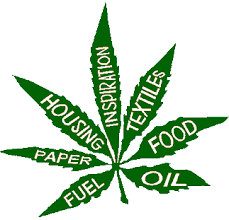
Industrial Hemp (the other cannabis cousin) would save millions of family farms all over the country. Industrial hemp products used as a source for fuel and energy would create enough sustainable business in the country to stabilize our markets. Very little would have to be done to change old manufacturing factories into hemp processing plants. America could be the leading producer of hemp textile products, building materials and diesel engine oil for transportation re-emerging in global commodity markets with a more sustainable gross domestic products than the war machine products America pimps out today.

For kids today, options for creating a sustainable livelihood strategy are limited to 1. Join the Military 2. Join a Street Gang 3. Prison 4. Working for less than what they are worth in non sustainable business sectors. It's important these kids understand what is happening in their World, so they are able to co creatively design better options for their generation and those to come. Cannabis offers solutions for the future.

Debunking the Gateway Drug Theory

Marijuana as a gateway drug has been used for a long time as a way to keep the general public fearful enough to maintain prohibition. The fact of the matter is drug use can be attributed to many factors no matter the order in which the individual chose to take any drugs: environment, influence and addictive personality traits.

Here is an example of a study done in Pittsburgh on the issue. Marijuana is no gateway drug article Here is a CBS news report quoted as saying: "There seems to be this idea that we can prevent later drug problems by making sure kids never smoke pot," lead researcher Dr. Karen Van Gundy, associate professor of sociology at the university, told CBS News. "But whether marijuana smokers go on to use other illicit drugs depends more on social factors like being exposed to stress and being unemployed - not so much whether they smoked a joint in the eighth grade." University of New Hampshire study It seems the only way to keep kids off drugs is wrapped up in having strong role models, ample opportunity for spiritual growth and a comfortable environment.

Pharmaceutical use in America poses another aspect to this paradigm many choose to ignore. When a person addicted to opiates (ie: morphine, vikadin) is no longer able to obtain a prescription, they often turn to black market heroin. Doesn't that make opiates a gateway drug to heroin? Check out these statistics on pharma use in America: Project America: Pharmaceutical use statistics What cracks me up about giving these numbers to teenagers is the column describing the adults telling you marijuana is a gateway drug. 64.1% of Americans aged 45 - 64 are using prescription medications. These are the same people perpetuating the gateway drug facade.

Here is some more ammo to debunk the Gateway Theory conversation. Many people who are addicted to hard drugs like meth are using Marijuana to help them end the habit. Here is an article on the subject: Cannabis used to help meth addicts I have personally helped patients ween themselves off opiates with Cannabis medicines. I guess that makes Cannabis a gateway to recovery and good health.


In conclusion, adults should not be talking "to" their teenagers about Cannabis, but exploring the new science together. So much has been discovered about Cannabis and its relationship with human bodies since the movie Reefer Madness affected a generation's perception decades ago. Many adults are learning the Truth about Cannabis just as their children are exploring the issue. Making those discoveries together strengthens the parent child relationship in surprising and effective ways which produce long term benefits.

Kids should be encouraged to find their inner entrepreneurial spirit and cultivate their ideas. The current state of the economy dictates small businesses will be the only sustainable livelihood strategy for the future. The good old days of getting a college degree to work for the big corporations have passed this generation. Security comes when they find their inner light and follow its lead.

Please send me your thoughts, ideas and experiences presenting information to the youth via email at StephanieBishop420@gmail.com. Comments are welcome and appreciated just below the post.


April 04, 2011

Owning Your Own Business Lesson #1: There is No Path of Least Resistance

The Nation’s job market woes are causing individuals to change the way they view the marketplace. People are realizing in a more competitive job market, good jobs matching ones qualifications are almost impossible to find. The dream of going to college, getting a good job, working for your retirement and then settling down in some small Florida beach town isn’t obtainable any longer. Each person being laid off from their once coveted and sought after position is asking themselves tough questions as they reenter the rat race known as job hunting. 

For most of my adult life, I have believed due to circumstance and lack of capital, I would have to work for someone else to guarantee a sustainable life for my family. Self employment was never an option in my mind and for a long time, I perpetuated that lie telling myself ‘I never wanted to do my own taxes anyway’ or ‘I just wasn’t self-disciplined enough to own my own business’. After going through job after job I hated for so many years, circumstances made me alter the way I thought about myself in the work place.  

First of all, I had to understand and accept a fundamental reality most people refuse to believe and spend countless empty hours pursuing.  There is no path of least resistance. Life is hard. Owning your own business is complicated, full of self reflective fears and riddled with harsh moments of clarity. Working in the same office for decades waiting for some far off retirement date sucks the creativity out of a person. Getting up every day, putting in more hours in a day than spent as personal time for someone else, watching corporate profit margins grow, grossly disproportionate when compared to the meager paycheck received each month is not easy either. Knowing the employee path is no easier than self employment helped me reach a level of determination that propelled me into the next phase of business development. 

The next lesson comes in faith and compromise. With any life endeavor worth experiencing comes a certain amount of commitment necessary from the individual in order to achieve optimal results. I learned I would never be able to work for someone else and still have enough time and energy to create my own business. I had to change my mindset, to be as determined to work for myself and I had been willing to throw myself into working for others. There is no room for compromise, no in between when it comes to building a business. Having faith in my ability, I had to take the vow to never work for anyone else again. I had to completely stop thinking of job hunting as a safety net, give up the time searching for the same old opportunities and focus all of my time and energy on creating my own products and marketing for myself. 

Lesson #3: Business is like farming. Each business opportunity starts as a seed planted in the universe.  The agricultural farmer plants lots of seeds to accommodate for those plants that may not make it as does a businessman cultivating opportunities in the market place. The farmer has to find a balance, though, for if he plants too many seeds and is unable to spend time cultivating them, the excess will die of neglect. The business man also considers these ill nourished seeds lost opportunities.  Either way, there is a considerable amount of un-tapped income in missed chances.  I have learned to balance business development with my ability to perform and produce, spending more of my energy creating and cultivating a few solid leads rather than giving into the need to make as many connections as possible only to lose them with lack of time to follow through. 

After a couple of years of adjustments, lessons in choices, sorrows and triumphs, I emerge happier than when I started the journey to business ownership. The rest of the trip is uncharted and I find myself more and more comfortable with the unknown. I am the change and I have more control over my life and finances than ever before. I encourage everyone to seek out their inner entrepreneur and start making plans for a business of your own. If everyone owned their own business, the World would be on its way to a more sustainable future.