Direct Democracy, or pure democracy exists where citizens write policy initiatives themselves. If activist groups collect enough signatures in the allotted time, the initiative makes it to the ballot. If voters approve the initiative, it becomes law. In representative democracy States, citizens vote for representatives who then write and implement policy based on the best interests of the citizens of that State. Currently, in the United States, California, Oregon, Colorado, Michigan, Arizona, North Dakota and Montana are direct democracy States and have been able to establish Cannabis regulation through direct voter initiatives. Oregon allows for all six forms of direct democracy. Let's examine what activist and special interest groups had to do to enact Cannabis Regulation in this State.
Oregon started its path to Cannabis regulation in 1973 becoming the first State to decriminalize Cannabis with The Oregon Decriminalization Bill abolishing criminal penalties for possessing small amounts of Cannabis. Possession of less than an ounce of Cannabis became punishable as a misdemeanor with a $500 to $1000 fine. Private use of Cannabis and public intoxication were no longer punishable offenses, however, public use and driving under the influence were punishable and continue to be to this day.
In 1998, The Oregon Medical Marijuana Act, established by Ballot Measure 67 was enacted allowing citizens with one or more of the listed qualifying conditions with a doctor's recommendation to obtain a State issued Medical Marijuana Card. This allowed the Patient possession of 1.5 pounds of Cannabis at any given time and the ability to grow 18 immature plants and 6 mature plants without the fear of citation, arrest or penalty. Patients could choose a caregiver to grow for them if they were unable and those caregivers would enjoy the same protections as the Patient. Before dispensaries were established, Patients had to grow their own or rely on a network of caregivers to produce medicine for them. Oregon became the second State in the US to enact a system of safe access for Medical Cannabis Patients following California Prop 215.
It wasn't easy to push this initiative through the legislative process through to implementation. First, activists had to write the initiative and gather signatures in the statutory time frame. After the vote, they had to ensure the Legislators followed through to implement the program and ensure law enforcement wasn't targeting Medical Patients in the program illegally.
Oregon is a direct democracy State allowing for a law to be citizen enacted by initiating a State Statute where special interest groups collect a certain amount of signatures for placement on the voter ballot. The first step in this process is providing the technical language for the law. In Oregon, the Ballot Measure 67 was authored by a small town member of the American College of Physicians, Dr. Rick Bayer, MD, Geoff Sugerman, a lobbyist for medical Cannabis Growers, activist John Sajo, attorney Leland Burger, ACLU Oregon executive director Dave Fidanque, and David Smigelski of advocacy group Oregonians for Medical Rights. The language in the law provided qualifying Medical Patients arrest and other protections from prosecution, created a patient registry, defined the Patient / Caregiver relationship and possession limits.
The second step in the process is collecting signatures. The Campaign for Ballot Measure 67 was run and managed by the Sugerman Group, co-petitioner Geoff Sugerman. By February of 1998, the group was established and solicits George Soros, Chairman of Soros Fund Management for money to hire signature gatherers to begin collecting the 73,000 signatures needed. George, partnering with Ethan Nadelmann of Drug Policy Alliance with contributions from individual donors paid for political ads and payroll for signature gatherers.
The Ballot Measure Campaign already had an audience through several well established media outlets. Paul Stanford of THCF Clinics, Madeline Martinez of the World Famous Cannabis Cafe and Director of OR NORML with local patient advocacy groups were producing Hempstalk bringing thousands of registered voters together in the same space as signature gatherers. The main stage speakers and panels filled with experts in drug law reform, hemp production and cannabis science educated the voters, compelling them to add their signature to the measure.
Paul Stanford also produced a TV Show running weekly on cable access Portland called Cannabis Common Sense. Every Friday night Local Doctors, Campaign advocates and special guests would speak about the economic, scientific, environmental and medical benefits of both Cannabis and Agricultural Hemp. The general tone of the conversation with average voters had already shifted towards regulation.
All of these factors together contributed to a solid defense against opposition groups including Oregon Against Dangerous Drugs and The Christian Coalition. The loudest speaker in the group of opposing parties was Multnomah County Sheriff Dan Noelle. His talking points were centered around Marijuana as an illegal drug degrading the youth who would have access to it leading to lawlessness. Since this campaign, the Sheriff has switched his views on medical cannabis.
After the bill was passed, it took some time for the Oregon State Judicial Branch to conform to the conditions of the new law. At first, legitimate Patients continued to be targeted for prosecution. It took a concentrated effort from attorney Lee Berger accompanied by key witness, Dr. Rick Bayer and a small army of court supporters to stop the effort. Mr. Berger had to convince the defendants in these cases not to take the plea deal, but to exercise their right to a fair trial. One by one, these cases were acquitted when taken to trial.
Kyllo v United States was a Federal win for Oregon growers decided 4 years prior to the passing of the medical bill. The decision using thermal imaging, or FLIR devices outside the home does not show just cause for a search within the home under the Fourth Amendment set the stage for legal language in Oregon law.
Today's Oregon Cannabis market is the culmination of 20 years of implementations, where businesses have been allowed to establish themselves and enjoy the benefits of sustainable economic growth. This would not have been a possibility without a savvy new generation of key players. These attorneys, business associations and individuals remained in the State Government buildings the whole time, driving the conversation as their initiatives were being amended each legislative session. These individuals provide sustainable business support to those looking to invest in Oregon's burgeoning markets now through trade business conferences, with legal representation and other services available to ensure success.
The International Cannabis Business EXPO began as a forum for Oregon businesses as the Oregon Marijuana Business EXPO before expanding into an international conference series, produced by Alex Rogers and Dean Arbit. These conferences combine business planning, politics and culture to educate the average business investor giving a clear and tangible path to establishing and sustaining every level of Cannabis businesses.
Portland was blessed with husband and wife team, Anthony Johnson and Sarah Duff who have lead the way for cannabis law reform activists since moving there in 2004. They have co-authored initiatives, petitioned for dispensaries and remained active throughout implementation of both medical and recreational businesses. Working with attorneys like Rachal Kurt, Business Development Manager at the National Cannabis Industry Association to establish a legal framework for business structure and representation, Oregon has maintained strong industry standards.
As recreational markets are opening, Oregon is experiencing normal, but extreme market fluctuations with a 40% surplus of last harvest. Businesses face traditional and non traditional market risks including regulation deterrents, lack of Government Compliance Systems (seed to sale), the need to utilize hard money lending solutions due to Federal Banking Restrictions, the presence of a necessary black market and vertical integration restrictions. The World is watching to see how Oregon businesses continue to thrive, grow and fail for the purpose of structuring legislature and developing implementation strategies in their local communities.
Showing posts with label Medical Marijuana. Show all posts
July 06, 2016
Economic Impact Study: How Cannabis Saved The Emerald Triangle
It was two days before Christmas, 1964. Most of the United States were enjoying Holiday festivities and completing tasks on
their last minute to do lists. The residents of Northern California and Southern Oregon were evacuating their homes threatened by record high flood waters in conditions meteorologists deemed "The Perfect Storm". The weather events effecting the Eel and Kalamath Rivers and all of their tributaries began December 14 when a cold front brought several feet of snow. Immediately after, a pineapple connection dropped more than 30 inches of rain in less than a week. In the end, the highest tide of the year coming in as the flooded rivers reached their peaks would cause the most destruction.
Residents recall the sound of the violent waters as a deep and unsettling roar not unlike an earthquake. This was the sound of giant redwoods and rocks pounding down the mountains in what experts estimate as much 750,000 cubic feet of water pumping per second. Logging was the major industry in the area at the time. Loggers created log jams in front of mills to collect the trees just cut from the mountains. The rushing water and debris knocked most of these loose and these giant trees took out everything in its path.
When the flood waters receded, most residents found all of their possessions to be destroyed or washed away. Debris from the event was later found to have traveled all the way to the shores of Japan's islands. The coastlines in California and Oregon were littered with personal items washed out to sea only to be returned with the shifting tides. Entire communities had been washed away.
Very few residents decided to rebuild after this event. Most logging companies abandoned any effort to reestablish themselves, the damage having been to much a burden to bear. Clean up efforts were slow as most roadways were blocked with debris or damaged by flood waters. The area was devastated economically, the people damaged morally having lost everything. What is now lovingly referred to as the Emerald Triangle was nothing more than sad remnants of life once lived and ghosts.
The Flood left something else people at the time did not see as valuable. Layers and layers of fertile river silt which would eventually provide the perfect conditions for growing cannabis. It turns out, the Eel River has one of the heaviest sediment loads, second only to the Yellow River in China. The sediment and low land prices would be contributing factors to the economic boom enjoyed by this region more than a decade later.
Hippies and The Vietnam War
In January of 1969, Richard Nixon took office as United States President. The Vietnam War waged on with US Casualties exceeding those lost in the Korean War and a new movement opposing the war in the US gaining ground. This new movement of people believed in living communally in harmony with nature. They believed peace could be achieved through artistic experimentation and engaged in civil acts of disobedience in opposition to the war.
Hippies were spreading awareness through music, producing the Woodstock Concert in August of 1969 and another concert in Alamont CA in December. Berkely CA housed the highest population of hippies at the time, but 1970 saw a waning in the popularity of the movement. After the National Guard opened fire on student protesters at Jackson State and Kent State Universities, Hippies became recluse searching for ways to live off the grid away from a society shunning them.
Hippies were attracted to Humboldt and adjacent c
ounties because the forest was so dense and the population diminished after the flood. Land had been split by this time into 5 and 10 acre parcels and was very affordable. By 1970, the hippies from San Francisco's Haight Ashbury were migrating north in large numbers. Several communes were established in the area and still thrive there today.
The first Hippies realized within a few years, communes were not profitable. By 1972, most communes were experiencing financial difficulties. Livelihood strategies included growing enough food for everyone living on the commune, profits from artistic endeavors and sporadic odd jobs. Up to this point, cannabis was just another plant in the garden offering communal residents enough for personal use. Eventually, with few other economic avenues to pursue, the hippies turned to a burgeoning, but illegal marijuana black market. Remote locations, very fertile soil and the ability to redirect water from river tributaries and mountain springs provided everything necessary for successful gardens. Local law enforcement, violence against hippies and backlash from local loggers made maintaining successful gardens very risky business.
The War on Drugs
Growing Cannabis as a livelihood strategy in a zero tolerance county led by politicians simultaneously declaring a "War on Drugs" and tightening penalties and restrictions is not an easy endeavor. Police forces were being militarized, arming themselves with military grade weapons. These municipalities were using these weapons to raid communes with force and often, without probably cause. Police Search Helicopters littered the skies above these Cannabis Growers resulting in a healthy paranoia and sense of distrust.
Distrust was warranted. Cannabis Growers can loose their crop at any time during the cultivation process in any number of circumstances. Bad weather, such as floods or droughts can kill an entire crop. Farmers loose their crops to insects, deer and elk, law enforcement, thieves or circumstances beyond ones control. The cost of doing business is high before one sees a return on investment. Most of the money earned goes back into the next crop.
The War on Drugs created a judicial system incapable of handling business disputes like normal businesses. Altercations were handled behind closed doors and with tight lips. Calling the police in the case of a home invasion was not an option, services were not made available to women in violent domestic situations. If the other party took off with product without paying for it, there was nothing to do about it. An army of police officers trained to believe the Marijuana Plant to be evil and those involved in the business no better than the violent drug cartels of Mexico were hell bent on eradicating the plant altogether and evicting the hippies from the area. These municipalities wreaked havoc on everyone, even residents not engaged in growing Cannabis.
The penalties for growing, processing and distributing Cannabis were always high. Growers could face decades in Federal Prison and loose their property, assets, children and any money accumulating in the bank. Regardless of the risks, Cannabis Farmers persisted and are now considered pioneers as States across the Nation have repealed prohibition by establishing new legislature for an industry growing at lightning speed. It appears the Federal Government is not far behind recently considering rescheduling cannabis to a less restrictive category in the DEA's drug diversion program.
Today, when one travels through the Emerald Triangle, signs of a burgeoning cannabis industry are everywhere. The grocery stores have elaborate displays of turkey bags in the front of the store all year. Hair salons double as trim supply stores offering any pruning scissors currently available on the market next to aprons, hand solutions and gallon containers of isopropyl. Every business in the area benefits from the cannabis industry from the restaurants to the thrift stores.
The State of California is still trying to interpret voter approved initiatives allowing for medical Marijuana as new legislature is being introduced for adult recreational use. Growers well established in this area are ready for whatever the future has in store for them, breeding organic, artisan strains one can only find growing amongst the giant redwoods. This region was saved by Cannabis and continues to enjoy the economic benefits of a healthy marijuana industry. These growers aren't going anywhere.
*The Emerald Triangle covers all of Trinity, Humboldt and Mendocino Counties.
Reference:
http://www.bidontravel.com/blog/canada-usa/arcata-ca-hippie-values-live/http://www.geocurrents.info/place/north-america/northern-california/the-1970s-transformation-of-californias-north-coast
September 09, 2015
The United Nations and Cannabis: Evolving Policy to meet increasing demands for Medical Marijuana Patients Globally
In 1961, Representatives from 185 Nation States convened and signed an International Treaty designed to control and regulate the production and use of several drugs (mainly Narcotics) considered to have scientific or medicinal value and prohibit the use of others considered addictive and harmful to society. The United Nations Convention on Narcotic Drugs has served as the basis for standardization of National drug control laws since. The United States enacted the Controlled Substances Act of 1970 to fulfill treaty obligations.
At the time the treaty was executed, two regulatory agencies were assigned to move specified narcotic drugs through the four stages of schedules, The Commission on Narcotic Drugs (CND) and the World Health Organization (WHO). The International Narcotics Control Board (INCB) and the United Nations Office on Drugs and Crime (UNODC) were commissioned to serve as administrators and compliance monitors.
Inclusion of a controlled substance in the Single Convention on Narcotic Drugs depends on its agreed placement in the scheduling system. Where a drug lands in the International Control Framework determines the type and intensity of controls. Currently Cannabis is scheduled as one of the most dangerous to society next to Heroin, Ecstasy, LSD, Benzodiazepines, GHB and Cocaine. Recent independent studies by the Global Commission on Drug Policy recommend Cannabis be moved to a low risk category.
Recently, at a Medical Cannabis and Cannabinoids Conference held in Prague, former deputy secretary of the INCB, Pavel Pachta told attendees the WHO would need to update their stance on Medical Marijuana to match current scientific findings soon. Many UN Representatives believing the current drug control system to be a failure are urging UN drug agencies to replace prohibition of Marijuana with legal regulation. Non Governmental Organizations working to reform International Drug Policy weighed in on the issue in a letter published through StopTheDrugWar.com. The letter represented more then 100 agencies and sited human rights violations as an immediate need for reform in global drug policy.
At the time the treaty was executed, two regulatory agencies were assigned to move specified narcotic drugs through the four stages of schedules, The Commission on Narcotic Drugs (CND) and the World Health Organization (WHO). The International Narcotics Control Board (INCB) and the United Nations Office on Drugs and Crime (UNODC) were commissioned to serve as administrators and compliance monitors.
![]() |
| Countries Party to the UN Conventions: Green Non Parties: Red Treaties Do Not Apply: Gold |
Adjusting where Cannabis is scheduled in the International Framework is not complicated. The UN Conventions on Narcotic Drugs of 1961, amendments in 1971 and the Convention on Psychotropic Substances of 1972 all contain provisional scheduling measures available to initiate in response to urgent problems.
Voter approved initiatives in the United States in Colorado, Washington, Oregon, Alaska and Washington DC establishing recreational markets moves outside conformity to the UN Drug Conventions because the nature of the documents limits use of controlled substances to medical and scientific purposes only. Advances in Medical Research and changes in Public Opinion creates an environment which necessitates immediate change.
Congress moved to clarify the US Government's position on the UN Drug Convention in October 2014 when Bill Brownsfield, The Assistant Secretary of State for Drugs and Law Enforcement at a press conference clarified. He outlined to members of the media how US Policy is centered around four pillars of thought: 1) Respect the integrity of the UN Drug Conventions. 2) Accept flexible interpretation of UN Drug Conventions with regards to how Nation States have changed since 1961. The Conventions should be updated to reflect current culture. 3) Tolerance of differing perspectives and enforcement methods of each Nation State. 4) No matter the difference, each Nation State works to combat criminal organizations.
Yury Fedotov, Executive Director of United Nations Office on Drugs and Crimes issued a statement expressing concerns new US laws are not compatible with current conventions.
Congress responds in January 2015 when Senators Dianne Feinstein (D-CA) and Charles Grassley (R-Iowa) call for the Obama Administration to address the disparity between US Policy and the boundaries necessary to conform to the standards laid out in the UN Drug Accord. Concerned about protecting the United State's long standing position as leader in the "War on Drugs", these Senators requested the Administration to account for remarks sending the message of tolerance for illegal drugs. (AKA Ogden Memos) The Senators also pointed out how recreational laws deviate from US commitments to confine production of cannabis to research and medical purposes only. Since the Senators letter to then Attorney General Eric Holder, was delivered, a new Attorney General has been assigned and the issue is still under review.
Reforms are necessary as International Trade is already happening between Nation States. Jamaica is setting up small farmers to export cannabis products such as infused lotions and body oils to Countries like Canada already set up to import these goods. Canadian Company FLOR whose Shareholders are mostly Jamaicans living in Canada is currently laying the groundwork for developing a supply industry. In addition, A Bob Marley Brand of such products has been announced to be available late 2015. Increasingly, Nation States are moving to regulate Cannabis use for both recreational and medical use. Countries like Germany, The Netherlands, Uruguay and Canada have established medical marijuana programs, while countries like Costa Rica are moving to establish similar programs through legislative action now.
Recently, at a Medical Cannabis and Cannabinoids Conference held in Prague, former deputy secretary of the INCB, Pavel Pachta told attendees the WHO would need to update their stance on Medical Marijuana to match current scientific findings soon. Many UN Representatives believing the current drug control system to be a failure are urging UN drug agencies to replace prohibition of Marijuana with legal regulation. Non Governmental Organizations working to reform International Drug Policy weighed in on the issue in a letter published through StopTheDrugWar.com. The letter represented more then 100 agencies and sited human rights violations as an immediate need for reform in global drug policy.
Convention may shift April 2016, during the United Nations Special Sessions on World Drug Problems (UNGASS 2016) where members of the international community will present recommended amendments based on shifting trends in current Nation societies. Although some Nation States still wish to use corporal punishment including the death penalty for drug related charges, most nations are relaxing drug user laws, allocating resources to prosecute manufacturers and traffickers over users. Many of these Nations choose harm reduction policies meant to reduce incarceration over more stringent prison terms. Attendees expect contention between the Nations with hard line policies like Russia, China and more liberal countries like Uruguay and the US.
In March 2015, an International Coalition of Medical Cannabis Patients from 13 Countries led by Americans for Safe Access delivered a declaration urging the 2016 UN General Assembly Special Session on Drugs to either reschedule Cannabis to a less restrictive category or remove the plant from the schedule all together. Coalition member countries include Bulgaria, Canada, Czech Republic, Estonia, France, Israel, Italy, Latvia, Poland, Slovenia, Spain, United Kingdom, and United States.
"Current international policy makes it extremely difficult for many countries to establish laws that will meet the needs of their citizens," said IMCPC co-founder, ASA Executive Director, and longtime medical cannabis patient Steph Sherer. "The International Medical Cannabis Patient Coalition is uniting patient organizations as a common voice in the effort to change these policies."
Considering the International Commerce already being established for Cannabis, changes need to be made if Nation States are able to meet the needs of their Citizens. All eyes will be on the UN Special Committee in 2016.
Research Links:
1961 United Nations Single Convention on Narcotic Drugs Wiki
United Nations Drug Control: Scheduling in the International Drug Control System
U.S. states' pot legalization not in line with international law: U.N. agency
Bob Marley: The First Global Weed Brand
Jamaican Small Farmers included in the Medical Marijuana Industry
Canadian Company Taps into Jamaican Medical Marijuana Industry
Legality of Cannabis by Country Wiki
United Nations Convention on Illicit Traffic in Narcotic Drugs and Psychotropic Substances
Huffington Post It's Time For The UN To Reform Its Global Drug Policies, Human Rights Groups Say
Groups from Thirteen Countries Form New "International Medical Cannabis Patient Coalition" to Reform UN Policy
In March 2015, an International Coalition of Medical Cannabis Patients from 13 Countries led by Americans for Safe Access delivered a declaration urging the 2016 UN General Assembly Special Session on Drugs to either reschedule Cannabis to a less restrictive category or remove the plant from the schedule all together. Coalition member countries include Bulgaria, Canada, Czech Republic, Estonia, France, Israel, Italy, Latvia, Poland, Slovenia, Spain, United Kingdom, and United States.
"Current international policy makes it extremely difficult for many countries to establish laws that will meet the needs of their citizens," said IMCPC co-founder, ASA Executive Director, and longtime medical cannabis patient Steph Sherer. "The International Medical Cannabis Patient Coalition is uniting patient organizations as a common voice in the effort to change these policies."
Considering the International Commerce already being established for Cannabis, changes need to be made if Nation States are able to meet the needs of their Citizens. All eyes will be on the UN Special Committee in 2016.
Research Links:
1961 United Nations Single Convention on Narcotic Drugs Wiki
United Nations Drug Control: Scheduling in the International Drug Control System
U.S. states' pot legalization not in line with international law: U.N. agency
Bob Marley: The First Global Weed Brand
Jamaican Small Farmers included in the Medical Marijuana Industry
Canadian Company Taps into Jamaican Medical Marijuana Industry
Legality of Cannabis by Country Wiki
United Nations Convention on Illicit Traffic in Narcotic Drugs and Psychotropic Substances
Huffington Post It's Time For The UN To Reform Its Global Drug Policies, Human Rights Groups Say
Groups from Thirteen Countries Form New "International Medical Cannabis Patient Coalition" to Reform UN Policy
August 05, 2013
Modern Day Morocco prepares to Regulate Cannabis Production for Foreign Investors
![]() |
| Cannabis fields in the Rif Mountains Source: the-misadventures-of-luciengrey.blogspot.nl |
![]() |
| A bowl containing beaten kif. |
It's too dry in this region to grow regular vegetables. If this region of the World did not have Cannabis, they would be forced to work in cities for salaries, only a small portion of what they receive now. For many of these families, Cannabis is the only source of sustainable income available for food, shelter and other meager living expenses.
Recently, the European Union offered Farmers other options for livelihood strategies in an attempt to curb production. They realized quickly the farmers here are not willing to do anything but grow Cannabis for the purpose of Hashish.
An estimated one million people are thought to benefit annually on the cultivation of cannabis on more than 200,000 farms. For these poverty stricken families, Cannabis is their only option as a livelihood strategy and Hashish production techniques have been passed down from generation to generation for hundreds of years.
Morocco exports more than 3,000 tons of processed Hashish with estimated values of more than $10 billion. making Cannabis 10% of the Country’s economy.
Local officials have traditionally protected Cannabis Farmers from becoming a part of the larger War on Drugs with only a few scattered stories of corruption, bribery and failed attempts by the European Union to offer subsidies to farmers willing to grow other agricultural commodities. For the most part Cannabis is accepted in society as a way of life and it’s not changing any time soon.
It comes as no surprise as more countries relax Cannabis prohibition laws, Morrocco’s Parliament is considering draft legislation allowing farmers a legal system of regulation and distribution of Cannabis products. Leaders in the country see Cannabis as a way to draw foreign investment as pharmaceutical companies show more interest in distributing Cannabis medicines in global markets. Over the next three years, Governor Mohamed Boudra of Huciema-Taounate, the Country’s Northern region will be working with Parliament to enact a program designed to build confidence and strengthen ties between farmers and Morrocco’s ruling Monarchy under King Mohammad VI.
“We have to ensure that any legalization is done in an optimal fashion,”Abdelhalim Allaoui, a lawmaker with the ruling Justice and Development Party, told Business Week.“We need to establish what the medicinal virtues of the plant are and then think of exports, pharmaceutical industry developments, and how to draw foreign investment. This is a promising sector for the economy.” Business Week Article
For the families using Cannabis as a livelihood strategy and for the end user in the European Markets, this is all very good news highlighting the economic benefits of a plant known to sustain life in this region for centuries.
March 20, 2012
Presenting Cannabis Issues to American Youths: Talking Points
| Baobab: Tree of Generations, South Africa |
Recently, I was asked to give talking points for a high school presentation about Cannabis. This question was difficult and yet so important, I took my best stab at it. I thought it may help others organize their thoughts and presentations, so I am posting my notes here.
Marijuana Legalization talking points for High School Students:
When speaking with high school students, I always take a moment to look at the World from their perspective. Their World is a very dark place, their options are bleak when considering their future. These kids want to know truth and have no time for anything less. Here is an article from the NORML Women's Alliance touching on this issue. Drug Education should reflect reality not deny it.
Not one person I have met wants to be presented with anything less than the full truth. There are so many inconsistencies in what is happening in the World and the information being reported. People today are developing stronger individual media filters and figuring out their own truths. Many are following the money closely to unravel economic breakdowns and corruption, others are working to restore constitutional rights.
Constitutional Law and The New Jim Crow, a book by Michelle Alexander
It's very important to me, kids understand what has happened in the War on Drugs on a legal and constitutional level. First, when a citizen of the United States is convicted of a felony, that individual is stripped of their right to vote or participate in any political processes what so ever, be it local, State or National politics. The New Jim Crow points out the number of non-violent drug offenders serving time in Federal prisons and shows how these United States Citizens are no longer allowed to vote, get credit, buy houses or get normal jobs. Their very livelihoods have been stolen from them and recovery is near to impossible in their minds. Consider also the prison system has been privatized and is run by a corporation with shareholders ultimately pushing for a higher payout on their dividend returns. The United States Government pays these corporations a per diem rate per prisoner.
Constitutionally, Marijuana is important because it is the most stark example of government stripping a citizen's inalienable rights slowly over a period of time. For instance, medical marijuana patients are not able to get a gun, are not protected from job discrimination and are giving up their rights to proper search and seizure and due process just by presenting cannabis patient identification. Already, police raids happen on private residences where neighbors smell it. These arrests are very similar to a home invasion where armed men commit violent acts against another human being and then steal their property, cause bodily harm or worse.
All of these States who have managed to get voter approved initiatives written into regulation are doing so based on the individual State's constitutionally protected right to govern themselves outside of interference of the Federal Government. For more information on State Laws and Initiatives visit NORML's Medical Marijuana StateLaws Page.
The next issue broken down would be what does legalization really mean? I did a whole piece on the differences between legalization, decriminalization and regulation here: Medical Marijuana Laws 101 The article is meant to be a crash course in the basics.
The Science of Cannabis
Every human being out there has an Endo-Cannabinoid system, a neurological receptor system for Cannabinoids. When the Cannabinoids (THC, CBD, CBN) connects with CB1 and CB2 receptors, messages are sent to nerve systems to either speed up or slow down whatever process needs work, thereby making it medicine. That is the good news for teenagers. The bad news - this receptor system is officially under construction until around 25 years of age. Inundating these delicate chemical receptors while in their development stages could lesson the effectiveness of cannabis as a medicine when it is needed later in life.
The Economics of Cannabis
The Cannabis Industry has created more jobs in the past 10 years than any other industry sector out there in United States markets. As this budding industry expands, it will change the way people think about medicine. Unlike pharmaceutical pills received with specific dosage instructions, a patient has to create an individual relationship directly with the plant itself. Cultivating individual plant / patient relationships will expand an already healthy activist movement in spite of federal efforts to continue prohibition.
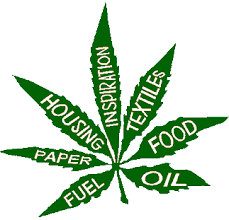
Industrial Hemp (the other cannabis cousin) would save millions of family farms all over the country. Industrial hemp products used as a source for fuel and energy would create enough sustainable business in the country to stabilize our markets. Very little would have to be done to change old manufacturing factories into hemp processing plants. America could be the leading producer of hemp textile products, building materials and diesel engine oil for transportation re-emerging in global commodity markets with a more sustainable gross domestic products than the war machine products America pimps out today.
For kids today, options for creating a sustainable livelihood strategy are limited to 1. Join the Military 2. Join a Street Gang 3. Prison 4. Working for less than what they are worth in non sustainable business sectors. It's important these kids understand what is happening in their World, so they are able to co creatively design better options for their generation and those to come. Cannabis offers solutions for the future.
Debunking the Gateway Drug Theory
Here is an example of a study done in Pittsburgh on the issue. Marijuana is no gateway drug article Here is a CBS news report quoted as saying: "There seems to be this idea that we can prevent later drug problems by making sure kids never smoke pot," lead researcher Dr. Karen Van Gundy, associate professor of sociology at the university, told CBS News. "But whether marijuana smokers go on to use other illicit drugs depends more on social factors like being exposed to stress and being unemployed - not so much whether they smoked a joint in the eighth grade." University of New Hampshire study It seems the only way to keep kids off drugs is wrapped up in having strong role models, ample opportunity for spiritual growth and a comfortable environment.
Pharmaceutical use in America poses another aspect to this paradigm many choose to ignore. When a person addicted to opiates (ie: morphine, vikadin) is no longer able to obtain a prescription, they often turn to black market heroin. Doesn't that make opiates a gateway drug to heroin? Check out these statistics on pharma use in America: Project America: Pharmaceutical use statistics What cracks me up about giving these numbers to teenagers is the column describing the adults telling you marijuana is a gateway drug. 64.1% of Americans aged 45 - 64 are using prescription medications. These are the same people perpetuating the gateway drug facade.
Here is some more ammo to debunk the Gateway Theory conversation. Many people who are addicted to hard drugs like meth are using Marijuana to help them end the habit. Here is an article on the subject: Cannabis used to help meth addicts I have personally helped patients ween themselves off opiates with Cannabis medicines. I guess that makes Cannabis a gateway to recovery and good health.
In conclusion, adults should not be talking "to" their teenagers about Cannabis, but exploring the new science together. So much has been discovered about Cannabis and its relationship with human bodies since the movie Reefer Madness affected a generation's perception decades ago. Many adults are learning the Truth about Cannabis just as their children are exploring the issue. Making those discoveries together strengthens the parent child relationship in surprising and effective ways which produce long term benefits.
Kids should be encouraged to find their inner entrepreneurial spirit and cultivate their ideas. The current state of the economy dictates small businesses will be the only sustainable livelihood strategy for the future. The good old days of getting a college degree to work for the big corporations have passed this generation. Security comes when they find their inner light and follow its lead.
Please send me your thoughts, ideas and experiences presenting information to the youth via email at StephanieBishop420@gmail.com. Comments are welcome and appreciated just below the post.
Subscribe to:
Posts (Atom)


